L’Unione Sarda
RESEARCH · ENVIRONMENT · DESIGN
Understanding the rhythms of plants. Understanding the landscape.
PHENOLOGY · CLIMATE
A landscape does not change all at once. First the buds open, then come the leaves, flowers and fruit; finally, plants slow down and rest. Phenology observes these stages and records when they happen. Each date tells us something about a plant’s relationship with light, temperature, rain and the place where it grows.
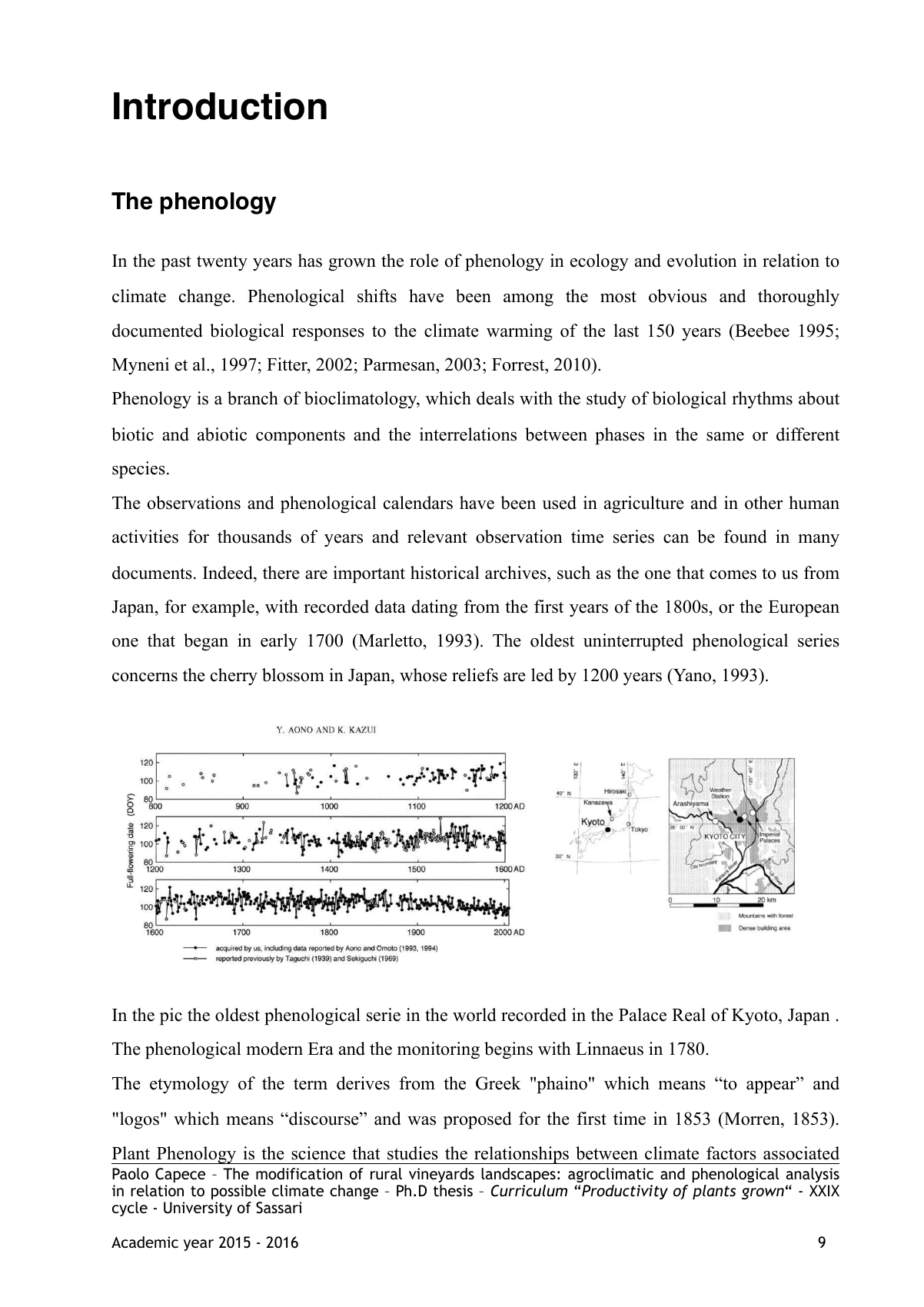
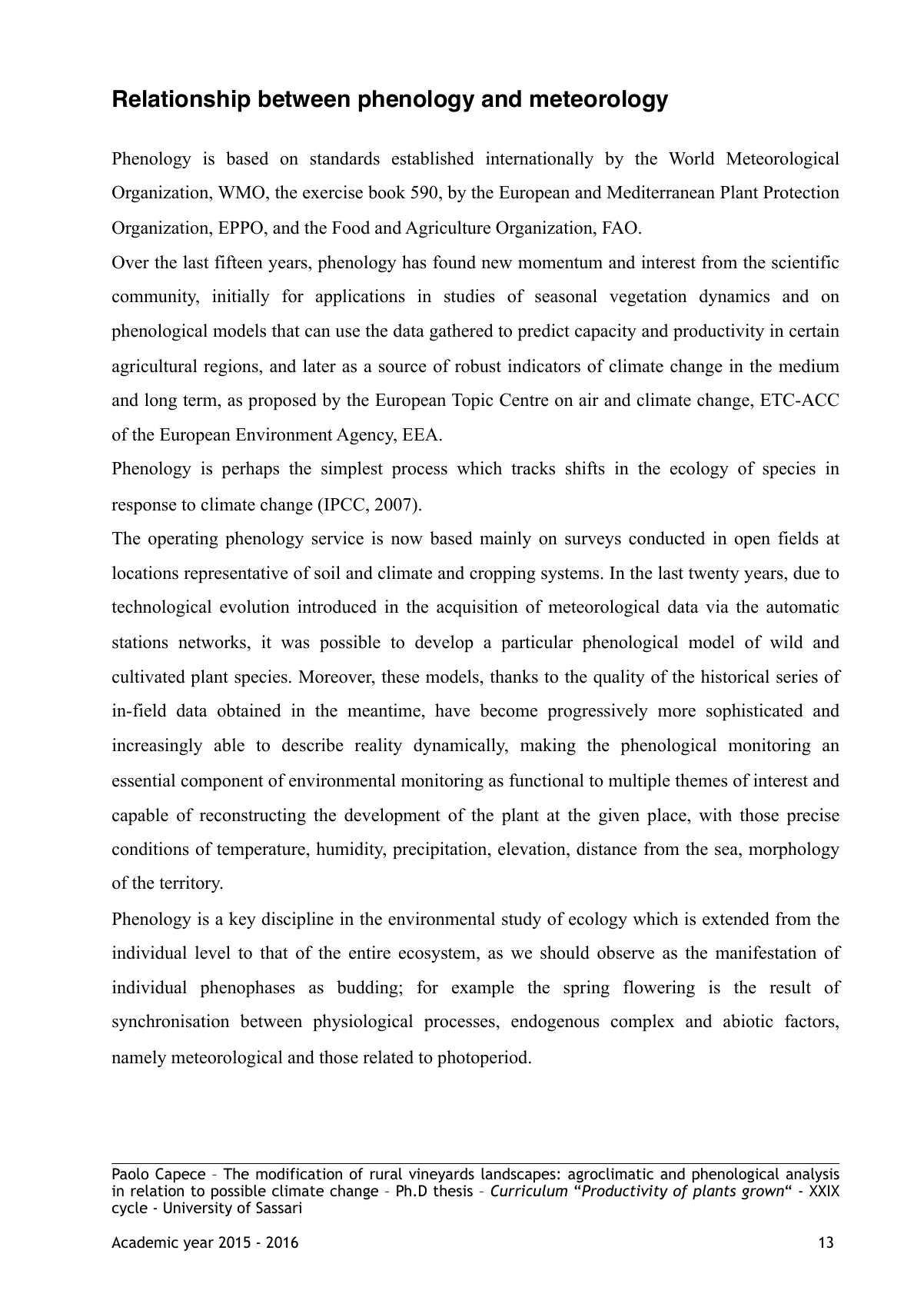
When the same observations are repeated over many years, they become a record of the climate. The cherry blossom dates recorded in Kyoto for more than twelve centuries are a remarkable example. In his doctoral thesis, Paolo Capece presents this series alongside a discussion of phenology, meteorology and climate change. The two original pages appear below.
DOCTORAL RESEARCH · UNIVERSITY OF SASSARI
Two pages from Paolo Capece’s thesis at the University of Sassari: the centuries-long observation of cherry blossoms in Japan and the role of phenology in climate research.
TISSI · SARDINIA · 2021
The life of plants becomes a public landscape.
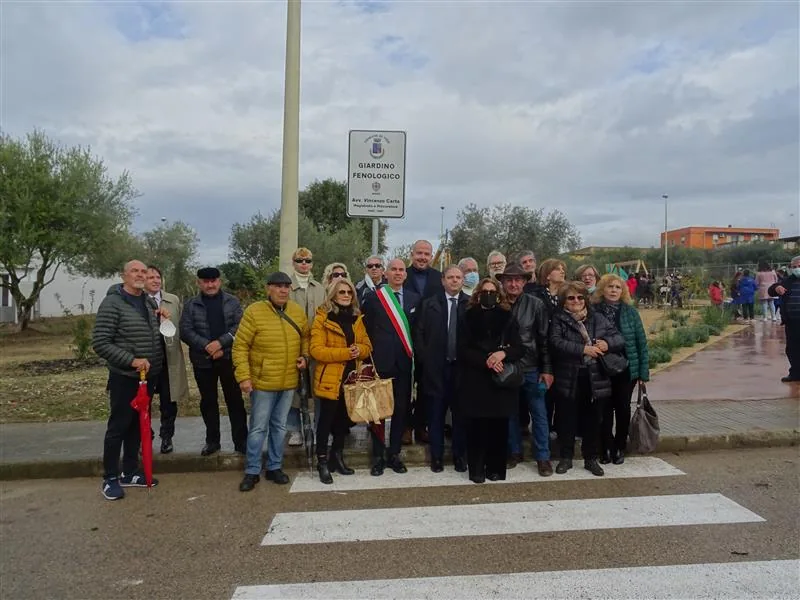
Bringing this kind of observation to Sardinia means looking at its landscape with the same patience. It is fascinating to think that a bud at Tissi can be compared with one on a plant of the same genetic origin in another European garden: their differences reveal how plants respond to different climates. Paolo Capece founded and coordinated the Regional Phenological Network and designed and realised two phenological gardens in Sardinia, at Sorradile and Tissi.
At Tissi, monitoring also becomes public space. Mayor Gian Maria Budroni chose to add a park and meeting places alongside the scientific garden. The path connects two streets in the town: research becomes part of everyday life and an opportunity for environmental education.
THE DESIGN
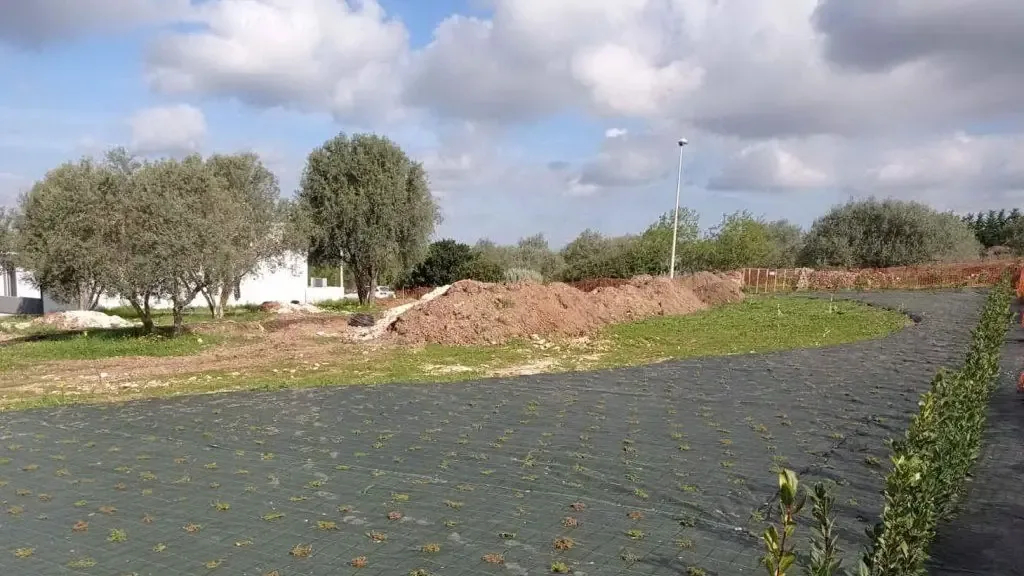
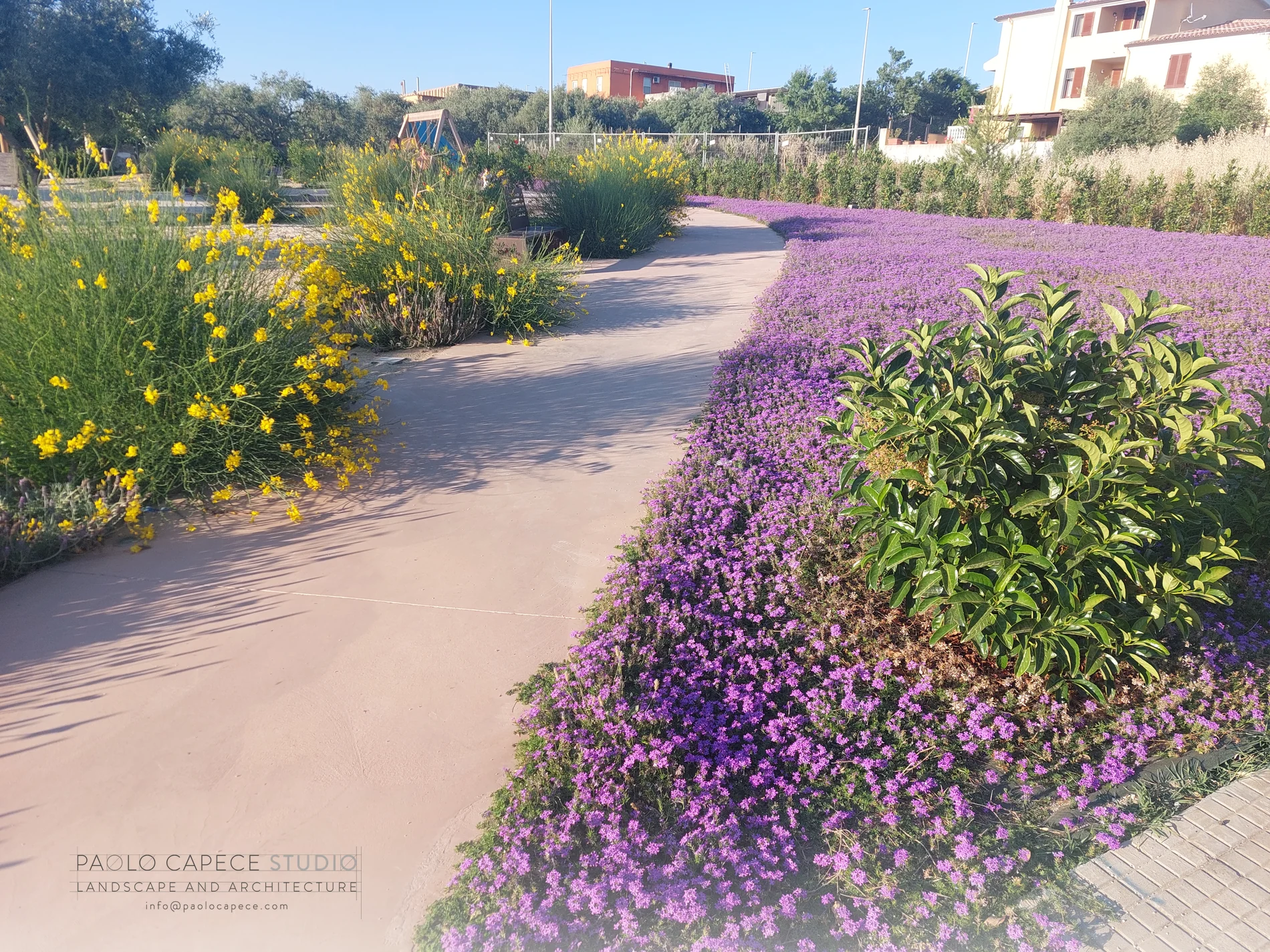
At Tissi, the garden is not reserved for specialists: a path crosses the park and connects two streets in the town. The European phenological observation area meets Mediterranean flowers and a public space open to everyone.
Paolo Capece donated his original landscape design to ARPAS, which subsequently donated it to the municipality of Tissi. The design was later modified to meet the municipality’s needs. Here we present the original landscape project.
Paolo Capece secured the project’s participation in the European Phenological Network. The garden received clones of plants also present in other European phenological and botanical gardens: plants of the same genetic origin, observed in different places and climates.
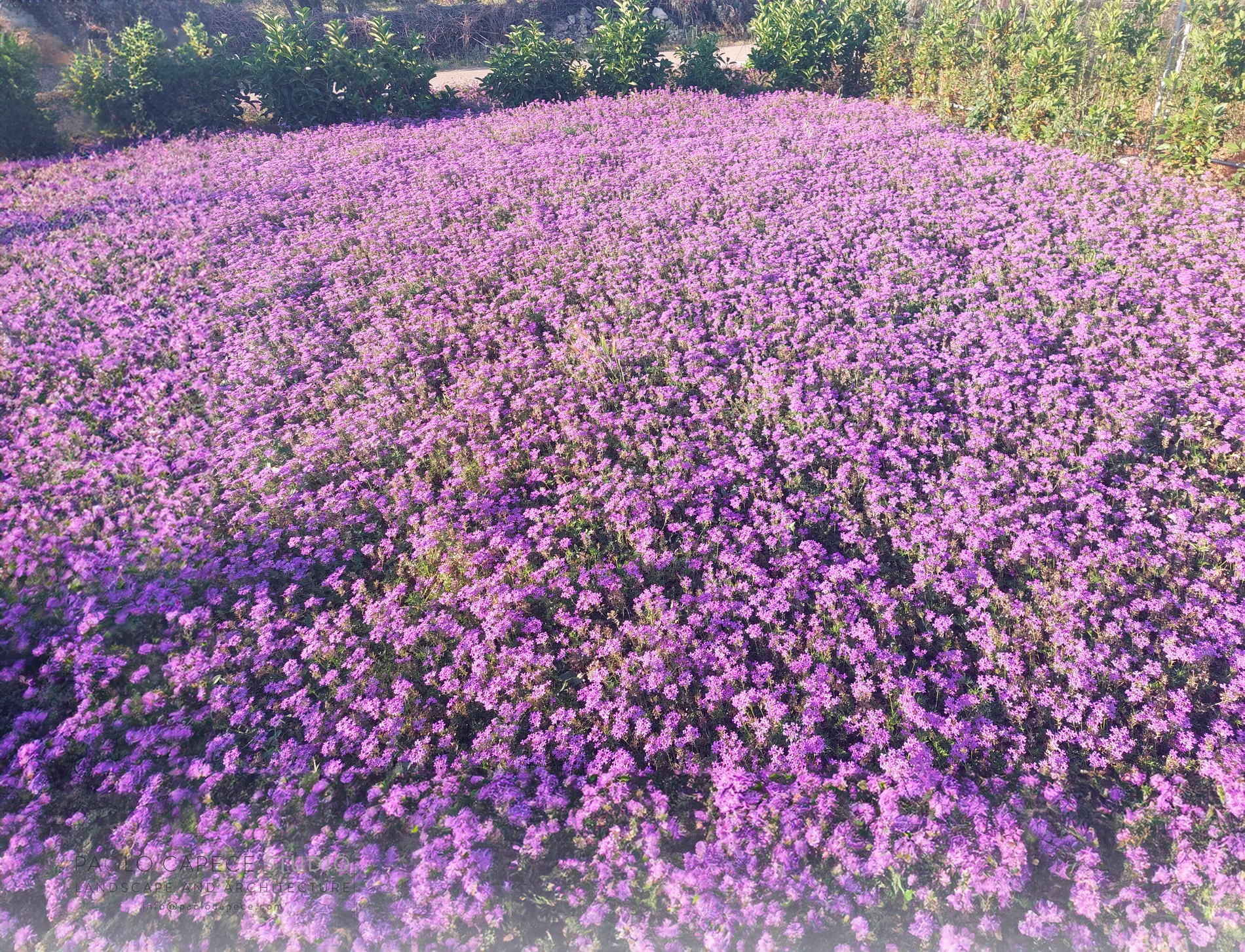
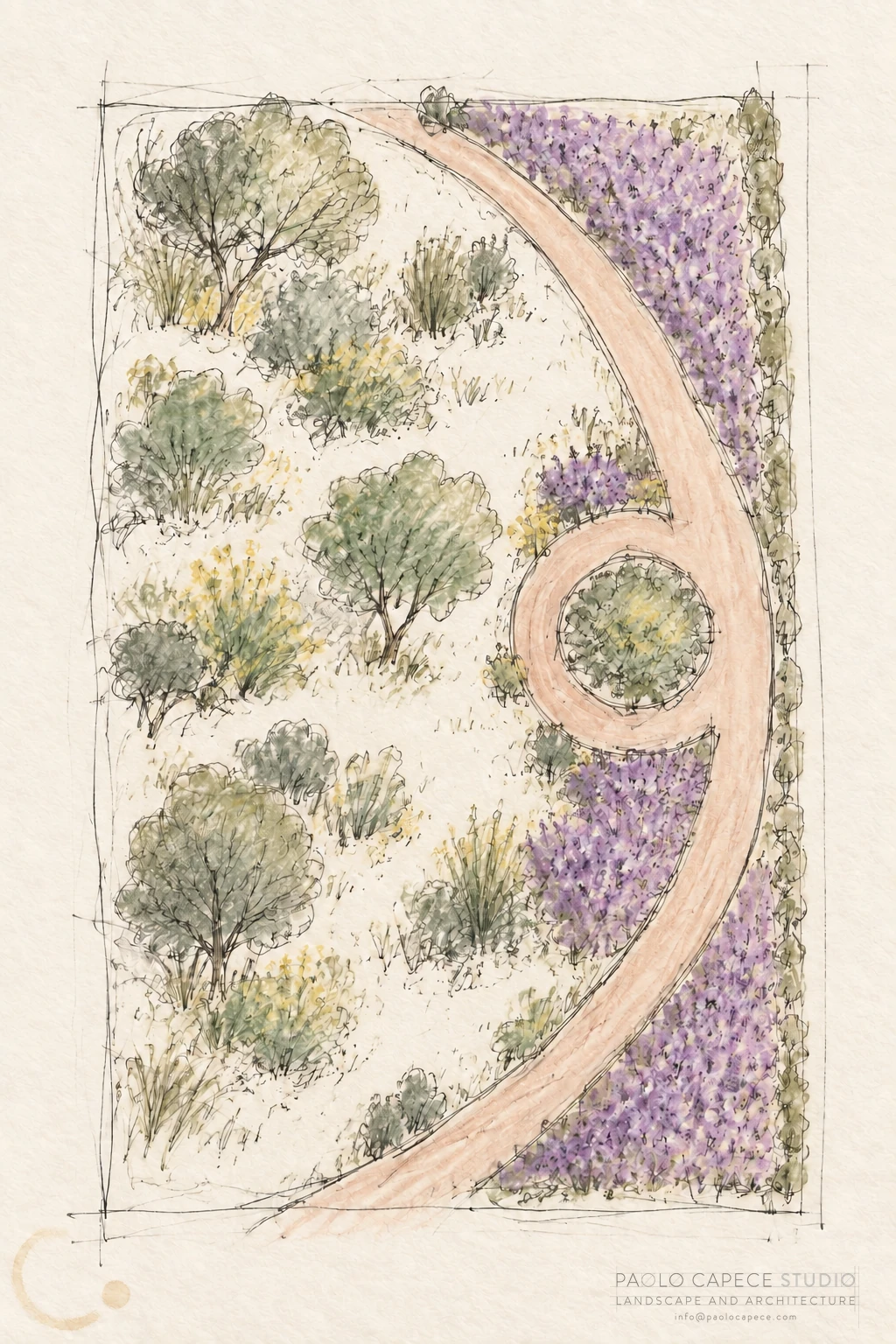
The visualization interprets the concept: a curved path crosses the garden, with two broad purple verbena meadows along its edge. The photographs show the real garden over time.
RESEARCH · CLIMATE
A phenological garden makes biological time visible. Recording when leaves emerge, plants flower and seasonal dormancy begins allows their life cycles to be compared with temperature, rainfall and seasonal patterns. Clones shared with other European gardens make comparisons between regions more meaningful: with the same genetic origin, observed differences help researchers study how plants respond to local climate. The value of the garden lies in continued observation, not in any single flowering season.
PRESS · TISSI
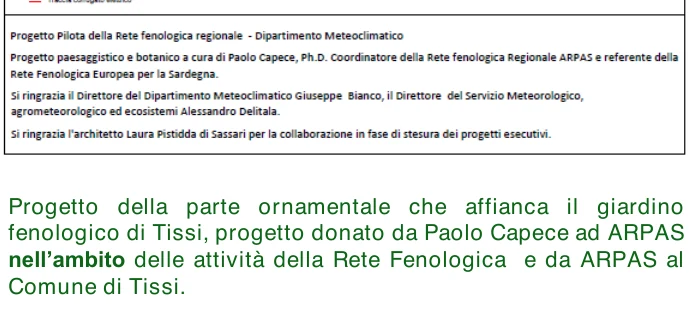
Two articles present the project, its opening and the garden’s role in climate research.
INTERNATIONAL EDUCATION
Paolo Capece’s studies at Shimane University in Japan and the University of Reading in the United Kingdom are part of a journey across agronomy and architecture. They inform an attention to time, seasons and the relationship between buildings and nature that underlies the Studio’s villas, parks and gardens today.
The Studio’s story ↗PUBLICATION
The volume Modelli per la difesa delle piante, edited by S. Pesolillo and M. Severini (Aracne, 2009), includes Paolo Capece among its contributors. His paper with Luigi Mariani and Osvaldo Failla examines the relationship between phenological models and grapevine protection.
YOUR NEXT PROJECT
A villa to imagine, a home to transform, a garden to inhabit. Tell us where you would like to build and what you have in mind.
studio@paolocapece.comCall the Studio
+39 389 540 3917SARDINIA, ITALY
Olbia · Via Montale
Sassari · Strada Vicinale Giagumona